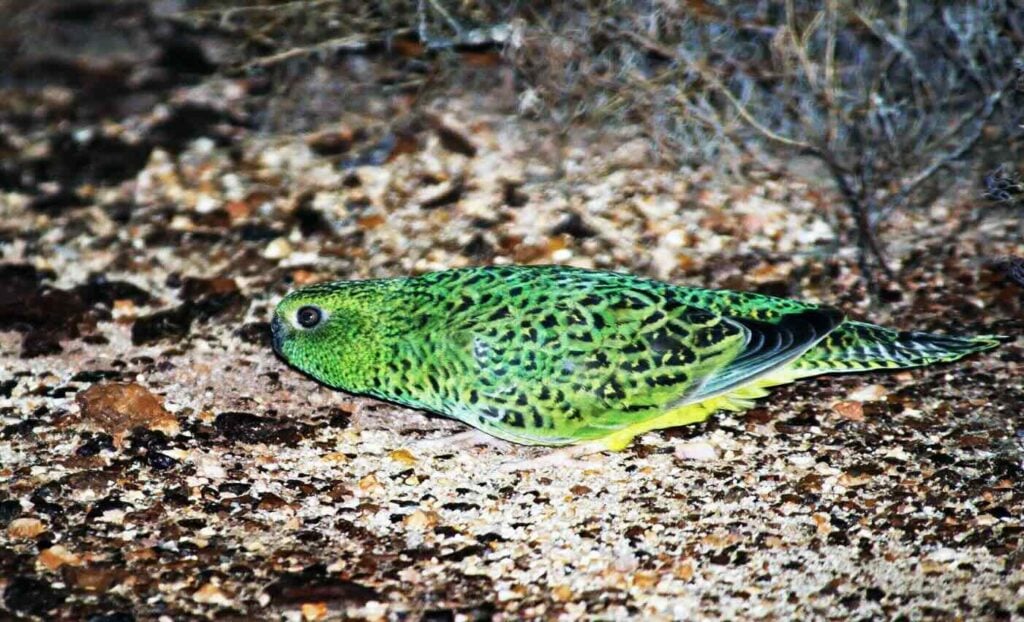
What was once believed to be lost forever has been found again: a stunning bird species, long presumed extinct, has been rediscovered after more than a century of no confirmed sightings. The enigmatic bird offers hope not only for its species’ survival but also for decades of wildlife conservation efforts worldwide.
The night parrot’s return: a miracle of survival and discovery
The bird in question is the Night Parrot (Pezoporus occidentalis), one of the rarest and most elusive birds on Earth. Native to Australia’s remote interior, it was last reliably documented more than 100 years ago, leading scientists and bird-watchers alike to regard it as extinct. :contentReference
Between 2020 and 2023, Indigenous rangers and scientific teams deployed rugged audio‐recorders and camera traps across dozens of desert locations. Their efforts revealed distinctive calls—described as “didly dip, didly dip” or a “dink dink” bell-sound—that led to confirmed detections of night parrots in dense spinifex grassland. :contentReference
These findings established that the bird was not a mere remnant sighting but a living, breeding population. The discovery of daytime roosts in mature spinifex domes, combined with advanced acoustic monitoring, confirmed both presence and habitat use of this once-mythical species. :contentReference
Why the rediscovery matters for conservation and biodiversity
The return of the Night Parrot is more than just a headline—it’s a landmark event in species recovery. For many decades, it was treated as a lost species until rare fragments of evidence surfaced: feathers, calls, or a single camera-trap image. Re-establishing its living presence shifts the conversation from “lost forever” to “how do we protect it now”.
Its rediscovery underscores the importance of Indigenous land-management, acoustic monitoring and remote sensing in uncovering hidden animal populations. These techniques are helping conservationists locate species previously believed extinct and reshape conservation priorities globally. :contentReference
Challenges ahead: protecting the night parrot after its return
Despite the good news, the Night Parrot remains critically endangered and faces serious threats. Primary among them are wildfires, feral cats, habitat degradation and loss of mature spinifex grassland. Because the bird is so secretive and nocturnal, gathering reliable data has been extremely difficult. :contentReference
Efforts now must focus on safeguarding its habitat, managing threats and supporting Indigenous ranger programmes that monitor and protect its range. The species’ existence underscores the need for long-term funding, habitat protection and collaboration between government, scientists and Indigenous communities.
What this rediscovery teaches us about extinct-in-nature assumptions
The story of the Night Parrot highlights how assumptions about extinction can sometimes be premature. Species thought lost may survive in small numbers in remote or overlooked habitats. With improved technology and community-led efforts, the “lost” species list may shrink — and hope for biodiversity restoration grow.
As scientists continue to monitor and learn more about this enigmatic bird, its rediscovery stands as both a triumph and a call to action: the night parrot may have escaped extinction, but its future now depends on our ability to protect and understand it.